

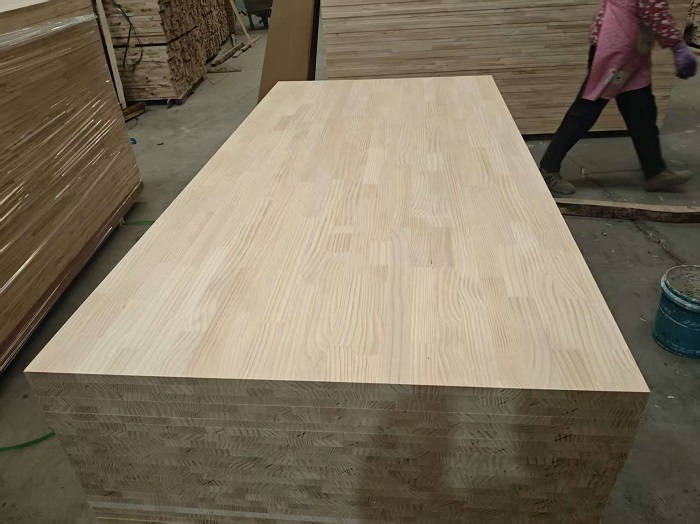
Finger joint pine plywood has become a reliable option for builders, cabinetmakers, and hobbyists who need a balance of strength, stability, and visual appeal. Its engineered construction, formed by interlocking short lengths of pine, makes efficient use of raw material while maintaining a consistent appearance. As more projects demand moisture resistance—whether for kitchens, bathrooms, outdoor structures, or humid climates—the question naturally arises: which waterproof coatings pair best with finger joint pine plywood?
Below is a detailed look at how this material behaves, what it needs for long‑term performance, and how different waterproofing approaches compare.
What Makes Finger Joint Pine Plywood Different
Finger joint pine plywood is characterized by the zig‑zag cuts on the end of each pine segment. These joints increase surface area and allow adhesives to bond the pieces securely. When pressed into plywood form, the result is a board with predictable dimensions, fewer defects, and excellent straightness.
Several features matter when thinking about waterproofing:
Pine is a softwood, more porous than hardwood.
The finger joints rely on adhesive, and protecting those seams is essential.
Plywood’s layered construction creates edges that absorb moisture faster than the surface.
These characteristics do not make the plywood weak, but they do influence how well various coatings perform. Moisture protection isn’t only about sealing the surface; it also involves minimizing water penetration into the edges and seams.
How Moisture Affects Finger Joint Pine Plywood
Pine plywood absorbs water unevenly. Moisture entering through edges can lead to swelling, veneer delamination, and discoloration. Even high‑quality finger joint products will show stress if exposed to repeated wetting and drying without protection.
Several common issues appear in poorly sealed applications:
Raised grain or surface roughness.
Glue line stress at the finger joints.
Warping, especially on large panels.
Mold growth in high‑humidity settings.
The right waterproof coating prevents these problems by creating a barrier that limits water penetration, strengthens the surface fibers, and stabilizes the panels.
Factors to Consider When Choosing a Waterproof Coating
Matching the coating to the application is more important than choosing the “strongest” coating. Some coatings excel at deep penetration, some at forming hard protective films, and others at allowing wood movement without cracking.
Important factors include:
Location: interior, semi‑damp, fully exposed, or submerged.
Desired appearance: natural wood tone, matte, satin, or glossy.
Maintenance expectations: low‑maintenance finishes usually require stronger films.
Drying and recoat times.
Compatibility with paint or additional topcoats.
With these in mind, the next step is comparing the most suitable types of coatings.
Penetrating Oils and Sealers
Penetrating sealers, such as tung oil, linseed‑based blends, and synthetic wood sealers, soak into the fibers to reinforce the structure and slow moisture absorption. They enhance the natural look of pine and provide flexible protection.
Strengths:
Easy to apply and touch up.
Keep the appearance warm and natural.
Reduce swelling and fiber raising.
Limitations:
Not enough for constant moisture or exterior exposure.
Require periodic re‑oiling.
These sealers work well for indoor projects where humidity is present—bathroom shelving, kitchen accessories, or decorative wall panels—without heavy water contact.
Location
Related Ads




Leave feedback about this