

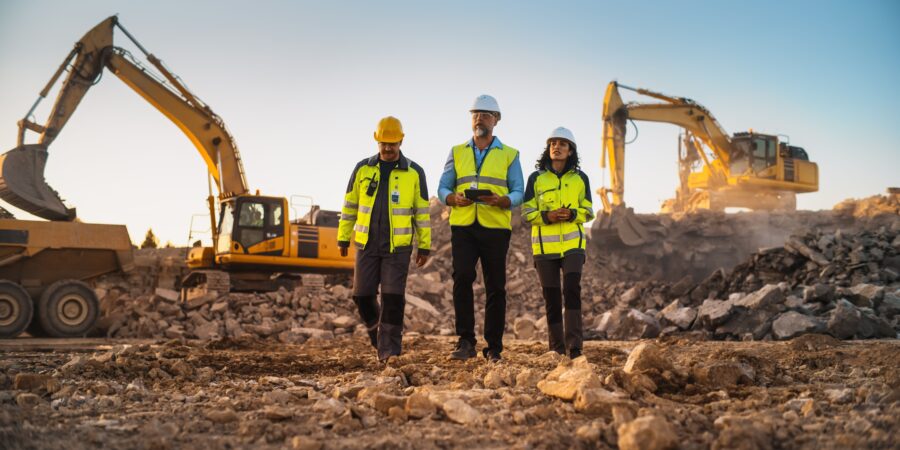
Construction hurts the environment, such as waste, emissions, land disturbance, and resource consumption, but these impacts can still be reduced with sustainable planning, eco-friendly materials, energy efficiency, and good management practices. Combining smart design choices, responsible resource use, and innovative technologies, contractors can develop projects that strike a balance between advancement and environmental stewardship.
In the United States construction industry, developers are increasingly pressured by regulators, communities, and clients to reduce the environmental impact of their projects. An essential step in achieving this is performing an accurate material takeoff, which involves carefully quantifying all the materials required for a project before procurement. By ensuring that only necessary resources are purchased, material takeoff helps minimize waste, lower costs, and improve overall efficiency. When combined with modern sustainability practices, this process becomes a key strategy for reducing a project’s ecological footprint while maintaining profitability.
Sustainable Planning and Design
Conduct Environmental Impact Assessments (EIA)
The contractors should first look out for possible risks that the land, water, air, and biodiversity might be affected before they start breaking the ground. In the US, EIAs are usually required for large projects, and they go a long way in the early identification of the mitigation measures.
Create a Construction Environmental Management Plan (CEMP)
A CEMP outlines the site-specific measures to be taken to monitor energy consumption, waste, and emissions. It guarantees that the sustainability objectives, which might have only been talked about, are actually implemented throughout the whole project cycle.
Prioritize Green Building Design
The designs that make use of natural ventilation, passive heating/cooling, and daylight are the ones that need minimal use of the artificial systems. The use of these features not only cuts down the operational costs but also raises the quality of the indoor air.
Aim for Green Certifications
Programs such as LEED and BREEAM are examples of green building standards that offer benchmarks for construction with little or no impact on the environment. Projects that have been awarded these certifications are more likely to attract the interest of investors and buyers and also serve as a firm’s commitment to sustainability that can be measured.
Responsible Material Selection
Use Recycled or Reclaimed Materials
Reclaimed timber, recycled steel, and concrete aggregates help to lower the demand for virgin resources. Besides, such materials also contribute to the reduction of emissions that are associated with the manufacturing process.
Voracious Low-Voc Durable Product Selections
Paints, adhesives, and sealants made of low levels of volatile organic compounds are good for air quality and work safety.
Make Use of Prefab and Modular Tech
Off-site building units result in less waste, less land use, and faster construction scheduling.
Support the Businesses in Your Neighborhood
Buying from local suppliers means fewer transport emissions and more dollars in the local economy, which is in line with community-friendly practices.
Reduce Waste and Recycle
On-site Waste Management System Installation
Special sorting areas for wood, concrete, and metal help to increase the recycling potential and minimize the amount of trash that goes to landfills.
Reuse the Materials that Are Left After Demolitions
The concrete can be recycled into aggregates, and the salvaged doors or fixtures can be reused in new buildings, which will reduce the cost of the materials.
Reduce Packaging Waste to A Minimum.
Working with suppliers to transport your bulk orders and reusable packaging can cut the amount of single-use waste significantly.
Waste Audit Implementation
Regular inspections discover inefficiencies and assist contractors in changing buying and disposal activities to achieve sustainability objectives.
Table: Common Construction Waste and Recycling Options
| Waste Material | Recycling/Reuse Method | Benefits |
| Concrete & Masonry | Crushed into aggregates | Reduces landfill use, lowers material costs |
| Wood | Reclaimed for furniture or mulch | Saves resources, provides secondary products |
| Metal (steel, copper) | Sent to scrap recyclers | High recovery value, reduces mining impacts |
| Drywall | Ground and reused in new boards or soil amendment | Cuts manufacturing demand |
| Asphalt | Recycled into road base material | Saves on quarrying and asphalt production |
Energy Efficiency
Use Efficient Machinery
New technology has contributed to the design of modern equipment that has significantly improved fuel efficiency. As a result, companies have reduced their operating costs and emissions.
Limit Idling Time
By enforcing a strict policy that no idling is allowed, the company can save a lot of unnecessary fuel consumption. At the same time, the air quality both on the site and near it gets better.
Adopt Renewable Energy
Presently, the application of solar panels, battery storage, and hybrid generators on construction sites, particularly those in the wild, is becoming more and more practical.
Water Management
Implement Stormwater Controls
Small-scale erosion and sedimentation are among the main causes by which rivers and lakes lose their natural character and get filled with the materials of which they are composed. Tools like the ones mentioned can prevent this from happening and, therefore, keep waterways clean from runoff generated by the construction.
Harvest Rainwater
Rainwater collected off roofs can be utilized for the afore-mentioned purposes and also landscaping, thus less water is drawn from the municipal storage.
Recycle Greywater
Recycled water from lavatories and temporary site facilities is used in the industries where the water cannot come from the main supply. This considerably reduces the water usage and disadvantages like utility costs, too.
Monitor Water Use
Using the latest technologies in measurement, such as smart meters and digital monitoring, helps tremendously in determining where the leakages are and if the water is being efficiently utilized during the whole project.
Land and Biodiversity Protection
Preserve Existing Vegetation
Leaving mature trees and healthy vegetation untouched will not only reduce soil erosion but will also provide natural shade and windbreak.
Limit Land Disturbance
By doing the site work carefully and phasing it properly, contractors can reduce the soil areas that are exposed and, at the same time, provide protected habitats for the animals.
Protect Soil Quality
Topsoil that is taken from the site and stored away for use in landscaping will be the source of fertility for the soil after the construction work has been completed.
Pollution and Emission Control
Dust Control
Methods like spraying water on dusty areas, covering dirt piles, and using dust stabilizers are very effective in reducing particulate emissions.
Noise Mitigation
Community disruptions can be minimized by the use of barriers, mufflers on equipment, and restriction of work to certain hours only.
Low-Emission Fuels and Equipment
The transition of machinery from diesel to biodiesel, or simply to electric, is a great move toward the reduction of greenhouse gases and air pollution.
Workforce Training and Accountability
Environmental Training for Workers
Workers’ education on waste management, pollution control, resource efficiency, and so on will lead to the on-site implementation of sustainability practices, which will be uniform.
Regular Audits and Compliance Checks
The Monitoring keeps teams accountable, which in turn ensures that environmental measures are maintained throughout the project timeline.
Conclusion
The effort to reduce the negative impact of construction projects on the environment is at the same time a duty and a chance – a chance to be the leader in green building practice, jumped by US contractors by adopting such measures as green planning, responsible material use, clean waste management, energy optimization, and water conservation.
FAQs
Q1. Why Is Minimizing Construction’s Environmental Impact Important?
A1. It protects ecosystems, reduces regulatory risks, saves costs, and improves community health.
Q2. What Role Does The Takeoff Of Material Play In Reducing Waste?
A2. Accurate takeoff ensures only necessary materials are purchased, cutting down on excess waste and costs.
Q3. How Can Construction Sites Reduce Air Pollution?
A3. Dust suppression, no-idling policies, and low-emission machinery all help reduce air pollution.
Q4. Are Sustainable Practices More Expensive?
A4. While initial costs can be higher, long-term savings from reduced waste, energy efficiency, and improved durability outweigh the investment.
Q5. Can Small Contractors Also Apply These Strategies?
A5. Yes, even small projects benefit from practices like recycling, sourcing locally, and using energy-efficient equipment.

Leave a Reply