

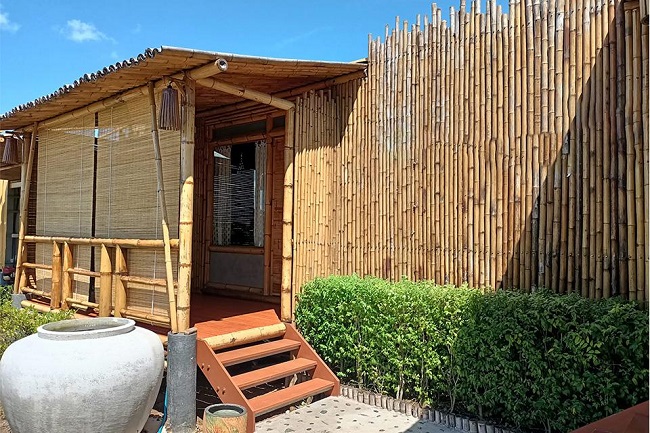
Arrive at a well-designed bamboo eco-resort and the first impression is usually a mix of calm and curiosity. The buildings sit lightly on the land, the air moves freely, and the structure itself feels both familiar and unusual—warm to the eye, yet technically precise. For many travellers, that experience is their first direct contact with bamboo as a serious building material rather than a decorative accent.
From the perspective of a bamboo house factory technologist, eco-tourism projects are some of the most interesting and demanding assignments. They bring together environmental expectations, hospitality comfort standards, and the practical realities of remote construction. When these elements are handled correctly, bamboo houses become more than accommodation; they become the signature feature of sustainable getaways and the backbone of a new generation of eco-tourism destinations.
Why Eco-Tourism and Bamboo Fit So Well
Eco-tourism is built around a simple promise: offer memorable experiences while keeping environmental impact low and supporting local communities. Bamboo homes align naturally with that promise.
Light Footprint, Strong Identity
Resorts and lodges built with bamboo can sit more lightly on their sites than conventional masonry or concrete buildings. Key advantages include:
Lower structural weight, reducing foundation size and soil disturbance
Component-based construction, allowing prefabricated elements to be assembled with minimal heavy machinery
Design flexibility, enabling stilted structures, modular units, and adaptable layouts that work around existing trees and natural features
At the same time, bamboo provides a strong visual identity. Guests immediately recognize that the material choice reflects a commitment to sustainability, and the architecture develops a distinctive character that sets the destination apart from generic hotel buildings.
Connection to Climate and Place
Eco-tourism projects are often located in tropical or subtropical areas where bamboo grows naturally or can be cultivated responsibly. Using bamboo in these regions creates a direct link between:
Local climate: where passive ventilation, shading, and open structures are viable
Local craft traditions: where knowledge of bamboo construction already exists, even if in traditional forms
Local economy: where plantations, processing facilities, and skilled labour can be integrated into the project’s supply chain
For travellers, this connection reinforces a sense of authenticity. They are not staying in a standard climate-controlled box imported from another context, but in buildings that respond to the environment around them.
From Factory to Forest: Prefabrication for Remote Sites
Most eco-tourism locations share one challenge: access is limited. Steep terrain, fragile ecosystems, or long distances make conventional construction slow, disruptive, and costly. This is where factory-built bamboo systems become especially valuable.
Precision Off-Site, Efficiency On-Site
In a controlled factory environment, bamboo components can be produced with tight tolerances and consistent quality:
Laminated beams and columns cut and drilled to precise dimensions
Wall and roof panels pre-fitted with insulation, service chases, and internal linings
Connection details established in advance, using standardised steel plates, bolts, and fasteners
These elements are then transported to site and assembled quickly, often with relatively small crews and minimal equipment. The benefits for eco-tourism projects are significant:
Reduced construction time in sensitive environments
Less noise, dust, and general disturbance for wildlife and surrounding communities
Lower risk of material damage from prolonged exposure on site
For a factory technologist, this requires careful coordination between design teams, structural engineers, and production. Any oversight in the workshop becomes a logistical problem in remote conditions, so clarity and accuracy are essential.
Modular Designs for Phased Development
Eco-resorts often grow in stages, starting with a handful of units and expanding as demand increases. Modular bamboo house designs fit this strategy well:
Standardised room or villa modules that can be replicated and combined
Common structural grids and connection systems across the development
Flexibility to vary façade treatments and interior finishes while keeping the structural kit consistent
The factory can then adjust production batches as the project expands, reusing established jigs, machining programs, and finishing protocols. This modular approach keeps costs predictable and simplifies maintenance over time.
Guest Comfort: Eco-Luxury with Bamboo
Eco-tourism does not mean spartan accommodation. Many guests now expect a blend of sustainability and comfort: natural materials, but also good beds, clean lines, and a sense of privacy and calm. Bamboo houses, when engineered and detailed correctly, support that balance.
Passive Comfort Strategies
Bamboo works particularly well in buildings that rely on passive comfort rather than intensive mechanical systems. Design strategies include:
Deep overhangs and verandas in laminated bamboo to reduce direct solar gain
Operable shutters and screens that provide shade and cross-ventilation
Ventilated roof assemblies using bamboo decks and sub-framing with reflective or insulated layers above
Raised floors on bamboo or hybrid frames to promote airflow and limit ground moisture
From a factory standpoint, producing consistent components—rafters, purlins, brise-soleil elements, screen modules—allows architects to repeat and refine these strategies across multiple units.
Acoustic Privacy and Interior Atmosphere
Guest satisfaction in eco-resorts depends heavily on acoustic comfort and perceived quality. Bamboo contributes through:
Engineered bamboo flooring and wall panels combined with acoustic underlays or insulation
Layered interior surfaces that break up sound reflections and soften ambient noise
Visible structure that gives rooms a crafted, intentional feel rather than a temporary or improvised appearance
Careful finishing is crucial. Sanding, coating, and joinery quality influence how guests perceive the standard of the accommodation. Any gaps, rough edges, or inconsistent colours stand out in a setting where the material is prominently exposed.
Hygiene and Durability in High-Use Settings
Eco-tourism units experience higher turnover and harder use than private homes. For bamboo houses, this calls for:
Surface finishes that are easy to clean and resistant to staining in bathrooms, kitchens, and circulation areas
Flooring grades with high abrasion resistance and stable bonding
Detailing that avoids dirt traps and allows for straightforward maintenance
From the factory side, this means selecting appropriate coatings, testing wear resistance, and defining maintenance cycles clearly in documentation provided to resort operators.
Environmental Performance and Storytelling
Eco-tourism is not just about the physical performance of buildings; it is also about the story that guests can see, feel, and take home.
Measurable Environmental Benefits
When bamboo is used as a primary material in eco-lodges, it contributes in several measurable ways:
Reduced embodied carbon compared with conventional steel or concrete structures
Lower material transport impacts if plantations and factories are reasonably close to the resort’s region
Improved resource efficiency through high-yield plantations and low-waste manufacturing
Lifecycle assessments and material data from the factory side can support these claims. Many operators now share key metrics with guests through brochures, digital guides, or on-site signage, turning technical performance into part of the guest experience.
Visible Craft and Material Honesty
Guests in eco-tourism settings often appreciate seeing how buildings are made. Exposed bamboo structure, clear connection details, and visible joinery all communicate craftsmanship. This can be reinforced by:
On-site or nearby workshops where guests can see small-scale fabrication or maintenance work
Information about how culms become engineered components, with photos or diagrams from the factory
Collaboration with local artisans to add hand-crafted elements that complement factory-made components
This blend of industrial precision and local craft strengthens the authenticity of the project and supports regional economic development.
Resilience, Safety, and Long-Term Operation
For bamboo houses to represent the future of eco-tourism, they must address not only sustainability and aesthetics, but also safety and longevity.
Structural Performance in Challenging Conditions
Eco-resorts are often built in regions with:
High humidity and heavy rainfall
Strong winds or occasional cyclones
Seismic activity
Engineered bamboo systems can be designed to handle these conditions through:
Verified mechanical properties from laboratory testing
Engineered connections capable of transferring uplift, shear, and moment forces
Hybrid strategies combining bamboo with steel or reinforced concrete where building codes require it
The factory’s role is to deliver components that match the engineering assumptions: correct species, densities, bond lines, and dimensions. Any deviation compromises performance, especially in repetitive modular systems.
Fire and Safety Considerations
Guest accommodation must meet strict fire and safety standards. For bamboo houses, this typically involves:
Sizing structural members to account for charring rates where elements remain exposed
Applying protective linings or treatments in specific zones, such as escape routes
Integrating alarm and suppression systems into prefabricated panels and modules
Using certified low-flame-spread interior finishes where necessary
Testing results and product certifications from the factory allow designers and operators to demonstrate compliance with regulations and reassure guests who might associate bamboo with increased fire risk.
Maintenance, Replacement, and Adaptability
Eco-tourism projects are long-term investments. For bamboo houses to remain viable, operators need a clear understanding of:
Expected service life for exposed and sheltered components
Re-coating intervals for exterior finishes under local climatic conditions
Methods for replacing individual elements without dismantling whole structures
As a factory technologist, contributing to maintenance manuals, component identification systems, and standardized replacement part catalogues helps ensure that resorts can keep their bamboo buildings in good condition without resorting to improvised repairs that undermine performance and appearance.
Economic and Social Dimensions
Sustainable getaways are not only about environmental metrics; they are also about the economic and social impact of material choices.
Local Value Chains
Where conditions allow, bamboo-based eco-resorts can support regional economies by:
Sourcing culms from local plantations under responsible management
Partnering with nearby processing facilities or establishing satellite workshops
Training local workers in assembly, finishing, and maintenance
This integration reduces transport distances, supports rural livelihoods, and gives eco-tourism developments a more robust social license. For factories, it can mean developing product ranges and training programs tailored to specific regions.
Market Differentiation and Guest Expectations
From a business perspective, bamboo houses help eco-tourism operators differentiate themselves in a crowded market. Guests are increasingly aware of material choices and often seek out accommodation that reflects environmental commitments.
Operators who can show:
Documented sustainable sourcing
Thoughtful material selection and design
Transparent communication about lifecycle and performance
gain a competitive advantage. The credibility of those claims depends heavily on the quality of the work done in factories and on the strength of the technical data behind the narrative.
The Technologist’s Role in Shaping Eco-Tourism
Inside a bamboo house factory, eco-tourism projects draw on a wide range of technical skills. The technologist’s work touches:
Product development: refining beam, panel, and modular systems optimized for lodge and villa typologies
Process engineering: improving drying, treatment, bonding, and machining to ensure durable components in harsh climates
Testing and validation: coordinating structural, durability, and emissions testing to support certification and compliance
Collaboration with designers and operators: advising on practical details, interface conditions, and maintenance strategies
Each successful eco-resort built primarily with bamboo houses becomes a reference point. Guests share images and stories, architects gain confidence, and developers see that sustainable structures can support high guest satisfaction and long-term operation.
The future of eco-tourism is moving toward destinations where the built environment and natural environment reinforce each other rather than compete. Bamboo houses, designed and produced with care, provide a clear path in that direction. For those working on the factory side, the opportunity is both technical and creative: to keep refining the material, the processes, and the systems that allow bamboo to serve as the structural and architectural foundation of sustainable getaways that feel as good to stay in as they are responsible to build.
Location
Related Ads





Leave feedback about this