

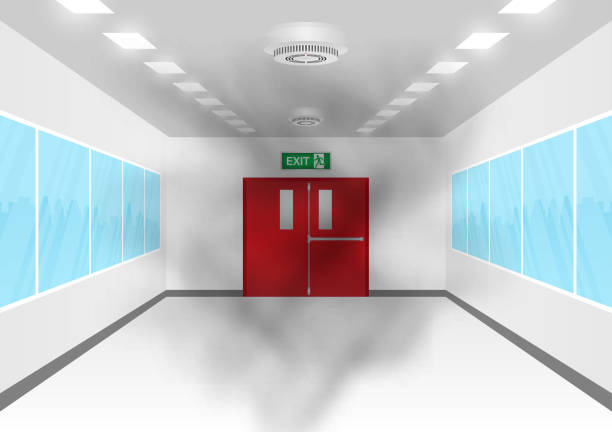
Fires tear through buildings with frightening speed. You might think you have plenty of time but smoke and flames travel faster than most people realize. A small flame can become a deadly inferno in under three minutes. The difference between safety and disaster often comes down to one thing a fire door. These unassuming barriers stand guard day and night. They ask nothing from us except that we keep them in working order. This piece walks you through their magic their mechanics and why you cannot afford to ignore them.
What Exactly Sets a Fire Door Apart From an Ordinary Door?
Walk through any office block or apartment complex and you will see dozens of doors. Most look alike from the outside. But peek behind the surface and the differences jump out at you. A standard interior door often has a hollow core. You can knock on it and hear that empty echo. It burns fast and offers zero resistance to smoke.
Fire doors belong to a different breed entirely. Manufacturers pack them with dense materials like solid timber or gypsum-based fillers . These cores resist heat and refuse to catch fire easily. The frame matters just as much. A flimsy frame ruins even the best door. Everything works together as one unit.
Look closer and you will notice strips along the edges. Those are intumescent seals. Under normal conditions they look like ordinary weather stripping. But throw heat at them and they spring into action. The strips expand and swell up to ten times their original size. They fill every crack and crevice around the door . Smoke cannot sneak through. Flames cannot find a path. That swollen seal buys you those precious extra minutes.
The hardware also tells a story. Hinges must hold the door’s weight without sagging. Handles need to withstand heat without failing. Self-closing devices ensure the door shuts every single time . Prop it open and you might as well remove it entirely. An open fire door protects nobody.
Some designs incorporate glass panels. But this is not your window glass. Fire-rated glass contains wire mesh or special coatings that stop it shattering under extreme temperatures .
How Do These Doors Actually Stop Fire Dead in Its Tracks?
Think of a building divided into boxes. Each box should contain any fire that starts inside it. Firefighters call this compartmentation . The principle seems simple but execution requires precision. Every door every wall every floor must work together.
When fire erupts it looks for paths. It wants oxygen and fuel. A closed fire door denies both. The intumescent seals block oxygen from feeding the flames. The solid core refuses to burn and add fuel. The fire stays put for thirty minutes maybe sixty maybe longer depending on the door’s rating .
Smoke kills more people than flames ever will. You might survive burns but breathing toxic smoke for sixty seconds often proves fatal. Smoke fills hallways and stairwells first. Those are exactly the places people need to escape through. Fire doors slam that door on smoke’s plans. The seals keep corridors clear .
Picture a flat on the fourth floor. A candle tips over in the living room. Curtains catch. Within minutes thick black smoke fills the kitchen. But the flat’s front door has proper seals and a working closer. That smoke stays inside. Neighbors upstairs sleep safely unaware. Firefighters arrive to find the blaze contained to one unit. That is compartmentation doing its job.
Why Bother With Regular Upkeep on These Doors?
People often assume once fitted a fire door stays safe forever. That assumption kills. Every door takes abuse daily. People slam them. Furniture bangs against them. Settling buildings twist frames. Seals dry out and crack over time.
A door that rubs against the frame might not close fully. That tiny gap seems harmless but smoke loves it. Hinges rust and loosen. Three screws might become two. The door hangs crooked and fails to latch. Someone painted over the seals years ago and now they cannot expand properly .
Building owners carry legal responsibility here. The Regulatory Reform Fire Safety Order 2005 lays it out clearly in the UK . You must ensure all fire safety measures remain in working order. Not sometimes. Not mostly. Always. Inspections need to happen regularly. Six months is standard but high-traffic buildings need more frequent checks .
When faults appear you fix them fast. A door closer adjustment takes minutes. Replacing damaged seals costs little. But ignoring problems invites disaster. Sometimes damage runs deeper. A hole through the door or a warped frame means replacement only . For those facing such issues searching for fire door repairs in Staffordshire connects you with qualified tradespeople who understand local requirements.
What Happens When You Neglect Fire Door Maintenance?
The worst scenarios play out when doors fail. A fire starts small but finds an open route because someone wedged a door. It spreads into corridors then stairwells. Now escape routes fill with smoke. People trapped above cannot get down. Firefighters struggle to reach the source.
Insurance companies take notes during such events. If they discover neglected fire doors they may refuse payouts . The building owner faces huge costs rebuilding and replacing everything out of pocket. Legal action often follows especially if injuries or deaths occur.
Fines from regulatory bodies hit hard too. Inspectors find broken doors and issue prohibition notices. The building cannot fully operate until fixed. Tenants move out. Business grinds to halt. All because someone ignored a sticky door or broken seal.
How Can You Spot Problems With a Fire Door Yourself?
You do not need specialist training to perform basic checks. Start with the certification label. Every genuine fire door carries a permanent mark showing it passed testing . No label means no proof. Check the gaps around the door when closed. A credit card thickness is about right. You should not see daylight peeking through anywhere. If light gets through smoke will too.
Inspect those intumescent seals. Run your finger along them. They should feel intact without cracks or missing chunks. Paint buildup over years can hide damage so look carefully .
Count the hinges. Three minimum is standard. Each hinge should have all its screws tight and no rust eating at the metal. Jiggle them gently. Movement means trouble. Test the closer last. Open the door halfway then release. It should swing shut firmly and latch without help. If it stops short or needs a push the closer needs adjustment .
Spot anything wrong? Report it immediately. Do not attempt DIY fixes unless trained. Fire doors need precise adjustments. Wrong parts or improper fitting ruin their protection. Using a professional for fire door repairs in Staffordshire guarantees the job meets standards.
What Rules Apply to Flats and Shared Buildings?
Multi-occupancy buildings face stricter requirements. The Fire Safety Act 2021 and Fire Safety England Regulations 2022 raised the bar . Responsible persons must now check communal fire doors regularly. They also need to inspect flat entrance doors because those protect everyone else.
Residents play a role too. Never ever prop a fire door open. That convenience today could cost lives tomorrow. A door wedge seems harmless until smoke fills the hallway. Likewise do not modify your flat door. Adding new locks or letterboxes without certification weakens the whole assembly .
Conclusion
Fire doors work harder than any other building component. They ask nothing yet give everything when needed. Their solid cores and clever seals hold back destruction minute by minute. Those minutes mean people escape firefighters arrive and buildings survive.
But they only work if we maintain them. Broken seals warped frames and faulty closers turn protectors into hazards. Building owners must inspect regularly and fix problems fast. Residents must respect these doors and never block them open.
The peace of mind from knowing your building has working fire doors is priceless. Whether you need simple checks or major fixes finding qualified help matters. Searching for fire door repairs in Staffordshire brings expertise to your doorstep. By caring for these silent sentinels we keep our homes workplaces and loved ones safer every day.
Frequently Asked Questions
How frequently should fire doors undergo inspection?
Experts recommend professional checks every six months minimum. High-use buildings need quarterly inspections. Residents should perform simple monthly tests themselves watching for closing problems or visible damage .
Is painting a fire door allowed?
Painting is permitted but proceed carefully. Never cover hinges seals or certification labels with paint. Multiple layers build up and affect gap clearances. Choose paint that does not impede intumescent seal expansion .
Which failure appears most often on fire doors?
Improper self-closing tops the list. Worn closers or loose hinges cause doors to drag or stop latching. Missing seals and excessive perimeter gaps follow close behind .
Why must fire doors remain shut always?
Fire doors block fire and smoke only when closed. Wedging them open cancels their protection completely. An open door invites flames and smoke to travel freely throughout the building .
Where can I locate reliable help for fire door repairs?
Qualified specialists offer the best solution. They understand legal requirements and proper techniques. Searching locally for fire door repairs in Staffordshire finds professionals who inspect repair and replace doors to correct standards .
Visit wefreeads for more informative blogs.

Leave a Reply