

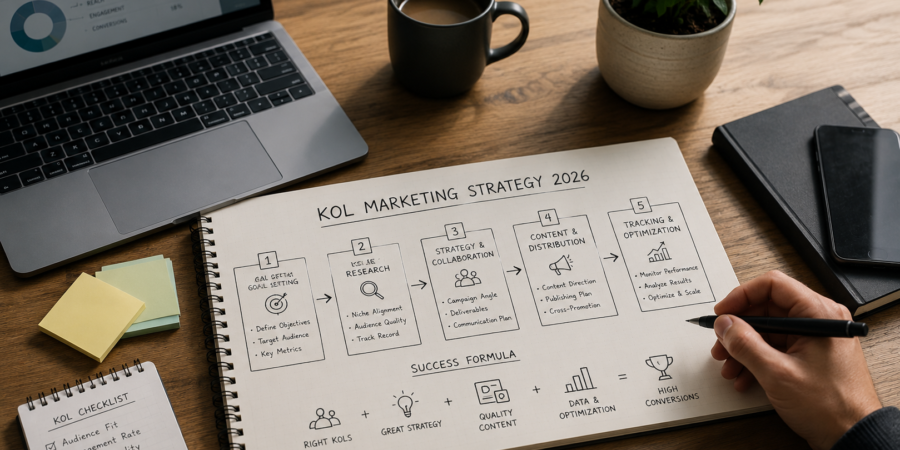
KOL marketing has evolved from a simple promotional tactic into a core growth strategy for modern brands.
In 2026, the landscape is more competitive than ever. Audiences are more informed, trust is harder to earn, and traditional influencer campaigns are losing effectiveness. As a result, brands are shifting toward KOL (Key Opinion Leader) marketing to drive credibility, engagement, and conversions.
But success doesn’t come from simply partnering with popular voices.
A high-converting KOL marketing strategy requires structure, precision, and a deep understanding of audience behavior.
This guide breaks down how to build a KOL marketing strategy that not only generates attention but drives real results.
What is KOL Marketing?
KOL marketing is a strategy where brands collaborate with trusted individuals who have influence within a specific niche or industry.
These individuals:
- Share expertise and insights
- Build strong audience trust
- Influence decision-making
Unlike traditional influencer marketing, KOL marketing focuses on credibility and relevance, making it more effective for long-term growth and conversions.
Why KOL Marketing Matters in 2026
The digital landscape is shifting toward trust-based engagement.
Users are:
- More skeptical of ads
- Less responsive to generic promotions
- More likely to follow expert opinions
This makes KOL marketing a powerful approach for:
- Building brand authority
- Reaching targeted audiences
- Driving meaningful engagement
- Improving conversion rates
Key Elements of a High-Converting KOL Marketing Strategy
1. Define Clear Objectives
Before launching a campaign, identify your primary goal:
- Brand awareness
- Community growth
- Product adoption
- Lead generation
Clear objectives help shape the entire strategy.
2. Identify the Right KOLs
Choosing the right KOLs is critical.
Focus on:
- Niche relevance
- Audience trust
- Engagement quality
Avoid selecting based solely on follower count.
Smaller, highly engaged audiences often deliver better results.
3. Understand Your Target Audience
A successful KOL marketing strategy is built around audience insights.
Ask:
- Who are your users?
- What platforms do they use?
- What type of content do they engage with?
The better you understand your audience, the more effective your campaign will be.
4. Develop a Strong Campaign Narrative
A high-converting campaign tells a story.
Your messaging should:
- Clearly explain your value
- Address user pain points
- Highlight real benefits
Consistency across all KOL content is key.
5. Focus on Content Authenticity
Audiences can easily detect forced promotions.
Allow KOLs to:
- Maintain their voice
- Share genuine opinions
- Create native content
Authenticity builds trust and trust drives conversions.
6. Use a Multi-Channel Approach
KOL marketing should not exist in isolation.
Integrate it with:
- Social media platforms
- Content marketing
- Community channels (Discord, Telegram)
A connected ecosystem improves user experience and engagement.
7. Optimize for Community Conversion
Driving traffic is only the first step.
You must convert that traffic into active users.
This involves:
- Strong onboarding flows
- Engaging community environments
- Continuous interaction
In many cases, brands align their campaigns with a structured KOL marketing agency to ensure that traffic generated by KOLs is effectively converted into long-term users.
8. Track Performance and Metrics
Measure what matters.
Key metrics include:
- Engagement rate
- Click-through rate
- Conversion rate
- User retention
Data-driven insights help refine and improve future campaigns.
Step-by-Step Framework for Execution
Step 1: Set Clear Goals
Define what success looks like.
Step 2: Research and Shortlist KOLs
Focus on relevance and trust.
Step 3: Plan Content and Campaign Flow
Outline posts, timelines, and platforms.
Step 4: Launch Campaign
Coordinate with KOLs and monitor activity.
Step 5: Engage and Interact
Respond to users and maintain momentum.
Step 6: Analyze Results
Evaluate performance and optimize strategy.
Common Mistakes to Avoid
- Choosing KOLs based only on popularity
- Running one-off campaigns without strategy
- Ignoring audience alignment
- Failing to track performance
- Over-controlling content creation
Avoiding these mistakes significantly improves campaign success.
Future Trends in KOL Marketing
As we move further into 2026, several trends are shaping the future:
- Rise of niche micro-KOLs
- Increased focus on authenticity
- Integration with Web3 ecosystems
- Data-driven campaign optimization
- Stronger community-centric strategies
Brands that adapt to these trends will gain a competitive advantage.
Conclusion
KOL marketing is no longer about visibility it’s about impact.
A high-converting KOL marketing strategy requires:
- Clear objectives
- The right partnerships
- Authentic content
- Structured execution
- Continuous optimization
When done correctly, it becomes a powerful driver of trust, engagement, and long-term growth.
Frequently Asked Questions (FAQs)
What is a KOL marketing strategy?
A KOL marketing strategy is a structured approach to collaborating with trusted industry experts to promote a brand and drive engagement and conversions.
How do you choose the right KOLs?
Choose KOLs based on niche relevance, audience trust, and engagement quality rather than follower count.
Is KOL marketing better than influencer marketing?
KOL marketing is often more effective for building trust and driving conversions, while influencer marketing focuses more on reach and visibility.
How do you measure success in KOL marketing?
Success is measured using metrics such as engagement rate, conversion rate, click-through rate, and user retention.
Can startups use KOL marketing?
Yes, startups can benefit significantly from KOL marketing by building credibility and reaching targeted audiences early.

Leave a Reply