

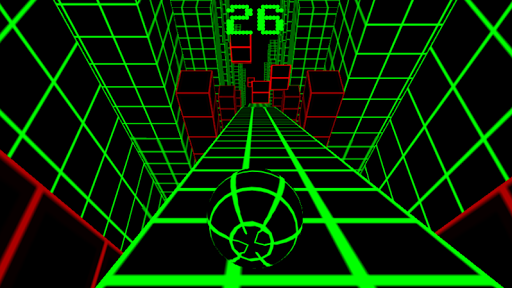
Have you ever found yourself staring blankly at your computer screen, yearning for a simple yet challenging game that can absorb your focus for hours? Look no further than Slope. This deceptively minimalist game, easily accessible online, provides an addictive test of reflexes and spatial awareness. It’s a pick-up-and-play experience that quickly becomes surprisingly compelling. This article will guide you through the core gameplay, share some helpful tips, and explain why this seemingly basic game has garnered such a dedicated following.
Gameplay: A Ball, a Slope, and Infinite Possibilities
The premise of Slope is elegantly straightforward. You control a ball relentlessly hurtling down a procedurally generated slope, comprised of angled planes. Your sole objective? Survive for as long as possible without falling off the edge.
Movement is controlled with just two keys, usually the left and right arrow keys or the A and D keys. These keys steer the ball left and right, allowing you to navigate the treacherous terrain. The constant downward momentum means you’re always reacting, constantly anticipating the next turn and avoiding the red blocks that litter the course.
The challenge arises from the ever-increasing speed of the ball. As you progress, the slope becomes steeper, the gaps wider, and the red blocks more numerous and strategically placed. This constant escalation keeps you on the edge of your seat, demanding lightning-fast reactions and precise control.
There’s no scoring system beyond your distance traveled. The longer you survive, the higher your score, fostering a competitive spirit and the constant desire to beat your personal best. The beauty lies in its simplicity; easy to understand, but incredibly difficult to master. Each run feels unique, thanks to the procedural generation, ensuring that no two descents are ever the same. The bright neon colors and pulsating electronic soundtrack further contribute to the game’s hypnotic and engaging nature.
Tips for Taming the Descent
While Slope might seem like a purely reflex-based game, a few key strategies can significantly improve your performance and extend your survival time.
- Anticipate, Don’t React: Don’t wait until the last second to make a move. Scan the upcoming terrain and plan your path accordingly. Predicting the next turn is crucial, especially as the speed increases. Try to anticipate the angle of the next plane and adjust your trajectory early.
- Short, Controlled Movements: Avoid long, sweeping turns. Small, precise adjustments are far more effective than large, panicked maneuvers. Focus on making subtle corrections to maintain control and avoid oversteering.
- Embrace the Edges: The edges of the platforms can be your friend. Don’t be afraid to ride close to the edge – in fact, sometimes it’s necessary to navigate tight corners. Just be careful not to go too far!
- Practice Makes Perfect: Like any skill-based game, persistence is key. Don’t get discouraged by frequent falls. Each run teaches you something new about the game’s mechanics and hones your reflexes. Keep practicing, and you’ll gradually improve.
- Focus: This one might seem obvious, but minimizing distractions is essential. Put your phone away, close unnecessary tabs, and dedicate your full attention to the game.
You can even try different keyboard layouts to see if a different configuration feels more comfortable and intuitive for you. Experimentation can be a surprisingly effective way to improve your game. If you are interested in playing, you can access it here: Slope.
Conclusion: A Simple Game with Endless Appeal
Slope is a testament to the power of simple game design. Its addictive gameplay, challenging difficulty, and unique procedural generation create a captivating experience that keeps players coming back for more. It’s the perfect game for a quick burst of entertainment or a longer, more focused session. So, if you’re looking for a challenging and engaging game that’s easy to pick up and play, give Slope a try. You might just find yourself endlessly descending into its addictive depths. Good luck, and try not to fall!

Leave a Reply