

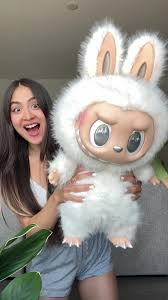
In the ever-evolving world of designer toys and collectible art figures, few characters have managed to strike a balance between unsettling and adorable quite like Labubu. At first glance, Labubu looks like a creature pulled straight from a whimsical nightmare—wide eyes filled with curiosity, a mischievous grin lined with uneven teeth, and an expression that seems to shift between innocence and chaos. Yet, this strange duality is exactly what has made Labubu one of the most recognizable figures in modern collectible culture. It exists in that fascinating space where “cute” meets “creepy,” challenging traditional ideas of beauty in toy design.
Labubu is not just a toy; it is an emotional experience packaged into vinyl, resin, or plush form. For many collectors, encountering Labubu is like meeting a character from a dream you can’t fully explain but also can’t forget. It evokes curiosity, nostalgia, and even a slight discomfort—all at the same time. This emotional complexity is one of the key reasons Labubu has become more than just a collectible and instead evolved into a cultural phenomenon.
Origins: From Artistic Imagination to Global Collectible Phenomenon
The story of Labubu begins with the creative vision of Hong Kong-based artist Kasing Lung, whose artistic style often blends fairy-tale innocence with darker, more emotional undertones. Labubu was introduced as part of The Monsters universe, a series that reflects whimsical yet slightly eerie characters living in a world that feels both magical and mysterious. Unlike traditional toy characters designed solely for cuteness or merchandising, Labubu was created with narrative depth in mind—each expression and pose hinting at a larger unseen story.
When POP MART recognized the artistic and commercial potential of Kasing Lung’s creations, Labubu was transformed from a niche art character into a globally distributed collectible. Through blind box releases, limited editions, and themed series, Labubu quickly gained traction among collectors in Asia and later expanded into Europe, North America, and beyond. The blind box concept, in particular, played a crucial role in Labubu’s rise. The uncertainty of which version a buyer would receive added excitement, turning each purchase into a small ritual of anticipation and surprise.
Over time, Labubu evolved through countless reinterpretations—seasonal costumes, fantasy themes, pirate versions, forest creatures, and even futuristic adaptations. Despite these transformations, the core identity of Labubu remained intact: mischievous, expressive, and unmistakably alive in personality.
Design Aesthetic: Where Cute Meets Chaos
What makes Labubu visually compelling is its deliberate departure from conventional cuteness. Instead of smooth, perfect features typical of mainstream character design, Labubu embraces asymmetry and exaggeration. Its sharp teeth, uneven smile, and slightly wild eyes give it a chaotic energy that feels both playful and unpredictable. This contrast is not accidental—it is central to its identity.
The design philosophy behind Labubu leans heavily into emotional storytelling through facial expression. Each version of Labubu seems to represent a different mood or personality state. Some appear curious and innocent, while others look like they are plotting mischief or reacting to something unseen. The variability allows collectors to project their own emotions onto the figure, making it deeply personal.
Color palettes also play a significant role in Labubu’s aesthetic appeal. Soft pastels are often used to enhance its cute qualities, while darker tones emphasize its eerie charm. Textures, accessories, and costume designs further expand its personality range, transforming it into everything from a forest spirit to a space explorer. This constant reinvention keeps Labubu visually fresh while preserving its core identity.
Cultural Impact: A Symbol of Modern Collectible Culture
Labubu rise is closely tied to the global boom in designer toys and pop-art collectibles. In a world increasingly driven by digital experiences, physical collectibles like Labubu offer something tangible and emotionally grounding. Collectors don’t just buy Labubu figures—they build emotional connections with them, often displaying them as part of personal spaces that reflect identity and taste.
Social media has played a major role in amplifying Labubu’s cultural reach. Platforms like Instagram, TikTok, and collector forums are filled with unboxing videos, shelf displays, and creative photography featuring Labubu in various themed setups. This online visibility has transformed Labubu from a niche collectible into a global aesthetic trend.
Beyond social media, Labubu also represents a shift in how people perceive “cute culture.” Traditionally, cute characters were associated with softness, innocence, and simplicity. Labubu disrupts this expectation by introducing complexity and emotional ambiguity. It proves that cuteness can coexist with eeriness, and that characters don’t need to be conventionally beautiful to be beloved.
In many ways, Labubu reflects modern emotional experiences—uncertain, layered, and sometimes contradictory. This makes it especially relatable to younger audiences who appreciate art that feels expressive rather than polished.
The Psychology of Collecting Labubu: Why People Connect Deeply
The appeal of Labubu goes beyond visual design; it taps into deeper psychological motivations behind collecting. One major factor is emotional attachment. Each Labubu figure feels like it carries its own personality, which encourages collectors to assign meaning or stories to them. Over time, these figures become more than objects—they become companions in a symbolic sense.
The blind box model also triggers anticipation and reward mechanisms in the brain. The excitement of not knowing which version will appear creates a sense of mystery and engagement that traditional retail products lack. This unpredictability encourages repeat purchases and fosters a sense of community among collectors who trade or share duplicates.
Another psychological aspect is nostalgia. Even though Labubu is a modern creation, its whimsical and fairy-tale-like design evokes childhood memories of imagination and storytelling. At the same time, its slightly dark aesthetic appeals to adult sensibilities, making it suitable for a wide age range.
For many collectors, Labubu also serves as a form of emotional expression. Displaying different versions can reflect moods, personality traits, or aesthetic preferences. In this way, Labubu becomes a mirror of the collector’s inner world.
Market Growth and Global Popularity
The commercial success of Labubu is a testament to the growing global demand for designer toys. What started as a niche art collectible has now become part of a massive industry driven by limited releases, collaborations, and exclusive editions. POP MART’s distribution strategy, combined with Kasing Lung’s distinctive artistry, has positioned Labubu as one of the flagship characters in the designer toy market.
Scarcity plays a key role in its market value. Limited editions and rare variants often become highly sought after, sometimes resold at significantly higher prices in secondary markets. This scarcity-driven ecosystem has created a dynamic collector economy where passion and investment often overlap.
International expansion has further boosted Labubu’s visibility. Pop-up stores, exhibitions, and collaborations with global artists have introduced Labubu to diverse audiences. Despite its commercial success, however, it has managed to retain its artistic identity, which is a rare balance in mass-produced collectibles.

Leave a Reply