

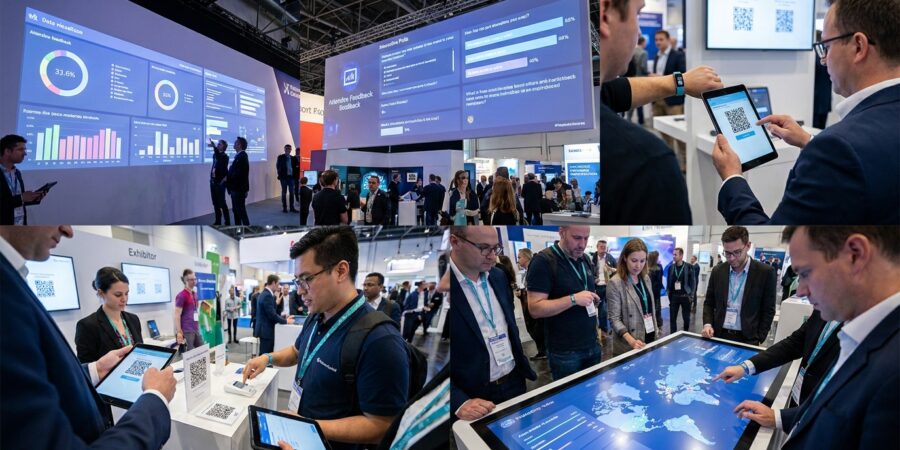
Ten practical ways organizations use data, sensors, and AI to measure attendee behavior and design events people value.
Event budgets face sharper questions than ever. Leaders want proof that a conference, expo, or product launch changed behavior, not just filled a room. That pressure explains the rapid rise of event engagement tracking technology. Instead of guessing whether an audience paid attention, teams can now measure it.
UFI’s Global Exhibition Barometer shows how far the shift has gone, reporting that most exhibition companies now use AI tools and that many organizers want more engaging, interactive event formats. Engagement has become a data set.
What Event Engagement Tracking Technology Measures
Event engagement tracking technology is the set of tools that capture how attendees behave during an event and turn that behavior into usable data. It records which sessions people join, how long they stay, which booths draw a crowd, and how they respond to content in real time.
Why does it matter? Attention is the real currency of an event. A packed agenda means little if people leave after ten minutes, and tracking gives organizers an honest view of what actually works.
Ten Ideas Reshaping How Organizations Measure Engagement
- Smart RFID and NFC Badges
RFID and NFC badges quietly record movement across a venue. Each tap into a session or pass by a reader logs attendance, dwell time, and traffic flow, so organizers learn which zones draw crowds and which rooms sit half empty.
- Mobile Event Apps With Engagement Scoring
A strong event app tracks check-ins, poll responses, saved sessions, and meetings booked, then turns that activity into an engagement score. It personalizes agendas to keep people active while giving planners a clear map of attendee interest.
- Beacons and Proximity Sensors
Bluetooth beacons add a layer of micro-location data across a floor. They show how people move between stages, lounges, and exhibits, and how long they linger, helping teams place high-value content where attention naturally collects.
- Computer Vision and Crowd Analytics
Camera-based AI-driven crowd and attention analytics count people anonymously and measure dwell time at specific displays. The result reads like a heatmap of the venue, and because the data stays aggregated, it supports privacy-safe measurement.
- Live Polling, Q&A, and Sentiment Analysis
Real-time polls and Q&A tools turn a passive audience into participants and generate instant interaction data. Add AI sentiment analysis to open comments, and organizers can read the mood of a session, not just the headcount.
- AI Matchmaking and Networking Analytics
AI matchmaking suggests relevant people, sessions, and exhibitors, then measures the connections made and meetings accepted. Networking, long treated as luck, becomes something teams can track and steadily improve.
- Interactive and Immersive Activations
Interactive event technology such as touch tables, holographic displays, and projection mapping draws a crowd and captures how visitors engage with the content. A well-designed immersive brand experience can log taps, choices, and time spent. Organizations planning experiential moments often work with specialists in immersive event and brand activations built to measure engagement to connect creative design with reliable tracking.
- Lead Retrieval and Exhibitor Interaction Capture
For exhibitors, engagement means qualified conversations. Lead retrieval tools capture badge scans, notes, and interest levels at the booth, giving sponsors a clear line from foot traffic to pipeline and the ROI evidence finance teams expect.
- Heat Mapping and Floor-Plan Analytics
Wi-Fi analytics and sensor fusion produce heat maps of an entire venue. Planners see where congestion builds and which aisles get ignored, and over several events that pattern data guides smarter floor plans and sponsor placement.
- Unified Dashboards and Lifecycle Engagement
A unified dashboard pulls badge, app, sensor, and survey data into one view, often with real-time ROI reporting. It also extends measurement past the event day, tracking on-demand content so engagement becomes a year-round relationship.
Turning Engagement Data Into Better Decisions
Technology alone does not create engagement. The value appears when data reaches the people planning the next event. PCMA has highlighted how disconnected systems create data silos, where useful attendee insight sits unused because no one can reach it. Integration matters as much as collection.
Three points keep these tools grounded:
- Privacy and consent. Anonymous, aggregated tracking builds trust, and attendees should know what is measured and why.
- Clear goals. Measure what connects to a business outcome, since data with no purpose becomes noise.
- Human judgment. Numbers show what happened, not always why, so pair analytics with direct feedback from attendees.
Conclusion
Events are moving from intuition to evidence. Event engagement tracking technology gives organizers an honest picture of attention, behavior, and interest, which leads to sharper decisions and stronger returns. The teams that treat engagement as measurable, and act on what the data shows, will design experiences people genuinely value. The tools are ready, and the advantage goes to those who use them with purpose.
Frequently Asked Questions
What is event engagement tracking technology?
It is a group of tools that measure how attendees behave during an event, such as session attendance, dwell time, booth visits, and responses to content, then turn that behavior into data organizers can act on.
Why does event engagement tracking matter?
It replaces guesswork with evidence. Organizers can see what held attention and what did not, which improves content, layout, and return on investment across future events.
How can organizations improve attendee engagement?
Set clear goals, then combine tools like mobile event apps, interactive sessions, and immersive activations. Track the results, share the data across teams, and refine each event based on what attendees actually do.
Which technologies are shaping the future of event engagement?
AI analytics, computer vision, proximity sensors, AI matchmaking, and immersive formats such as holographic displays and projection mapping are leading the change, most of them built on real-time, privacy-safe data.
Is attendee tracking safe for privacy?
It can be, when handled responsibly. Aggregated and anonymous methods measure patterns without identifying individuals, and clear communication about what is collected helps maintain trust.

Leave a Reply