

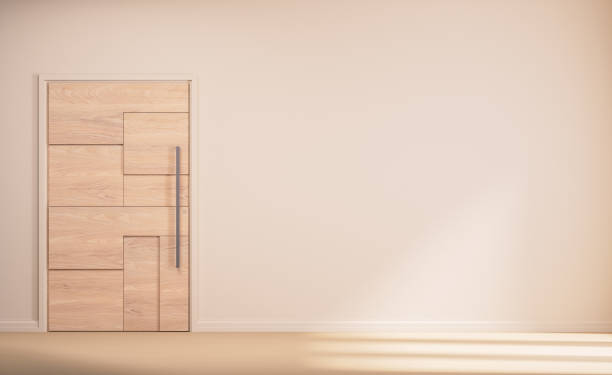
Pick up an oak door and you understand immediately why it costs more than the alternative. The weight tells you something before you have even looked at the grain. There is a density to it that hollow core and MDF construction simply cannot fake regardless of how convincing the veneer looks in a showroom photograph.
That weight is not just a physical characteristic. It is the material doing what it was always going to do when someone chose timber that had been growing for decades before it was ever milled. Oak is not manufactured to a specification. It is grown to one. The resulting material behaves differently from engineered substitutes in ways that matter over the life of a property.
What Oak Actually Does to a Room
Close an oak interior door and the room changes. Not dramatically. Subtly. The sound from the hall reduces in a way that a hollow flush door does not produce. The grain visible across the face of the door catches light differently at different times of day. The room reads as more considered because the door belongs to it in a way that cheaper alternatives do not.
This is difficult to quantify and easy to feel. Estate agents who walk properties regularly understand it. A house with original oak internal doors or quality replacement oak doors reads differently during a viewing from a house with standard hollow core flush doors throughout. The material signals that the property has been looked after and that decisions were made with quality in mind rather than minimum cost.
Oak interior doors carry that signal more reliably than almost any other internal finish choice at the same price point. New kitchen worktops carry a similar effect but they cost more and cover less visual ground. An oak door fills the full height of a room opening and it is present every time someone moves between spaces.
The Grain as a Feature That Manufactured Materials Cannot Replicate
Oak has a grain structure that produces markedly different visual effects depending on how the timber is cut from the log. Plain sawn oak shows broad cathedral arches across the face of the door. Quarter sawn oak produces tighter straighter grain with the ray fleck pattern that gives the material its distinctive shimmer under certain lighting angles.
Neither of these effects can be convincingly replicated by a printed veneer or a laminate regardless of how sophisticated the reproduction process has become. The variation in a real oak grain is three-dimensional. The timber reflects and absorbs light differently across its surface. A printed reproduction sits flat against the substrate and reads as flat regardless of viewing angle.
This matters to buyers in a way that is worth understanding if you are making a decision about where to invest in a property. Buyers who care about material quality notice the difference between real oak grain and a reproduction almost immediately even if they cannot articulate exactly why one looks right and the other does not. The eye is better at reading authenticity than the conscious mind is at explaining it.
Solid Oak Versus Oak Veneer and Where Each Belongs
The distinction between solid oak and oak veneered doors is worth understanding clearly before making a purchase decision because the two products behave differently in use and suit different environments.
Solid oak doors are milled from timber throughout the door construction. They are genuinely heavy and the material visible on the face continues through the full thickness of the door. They expand and contract with changes in ambient humidity because that is what timber does. In a stable environment with consistent heating they perform beautifully over decades. In a bathroom or kitchen where humidity swings significantly they need very careful sealing on all surfaces including the top and bottom edges before hanging or the seasonal movement becomes a fitting problem.
Oak veneered doors use an engineered timber core faced with a real oak veneer of sufficient thickness to show the grain and take finishing. They are dimensionally more stable than solid oak because the engineered core resists humidity-driven movement better than solid timber. They are lighter and typically less expensive while still delivering the visual quality that makes oak worth choosing. For most rooms in most houses an oak veneered door from a quality supplier achieves everything a solid oak door achieves at lower cost and with fewer fitting complications.
Oak interior doors from reputable UK suppliers carry specifications that make the distinction clear. A thickness of veneer below 0.6mm is a warning sign. A quality oak veneer door uses veneer thick enough to sand and refinish if the surface is ever damaged years down the line.
How Oak Ages and Why That Matters to Property Value
Most materials used in interior construction age by degrading. Paint chips. Carpet flattens and stains. MDF swells at edges where moisture reaches the core. The degradation is a one-way process and the material looks worse with each passing year.
Oak ages differently. The timber darkens over time as it oxidises and the darkening is even across the surface and the grain pattern remains fully visible throughout. A well-maintained oak door at twenty years looks mature rather than tired. The patina that develops is the kind of quality signal that buyers at the upper end of the market understand and respond to.
This ageing characteristic is part of why period properties with original oak joinery command a premium. The timber has done something over time that no new installation can replicate immediately. Replacing lost or damaged oak doors in a period property with matching oak replacements recovers that value in a way that substituting cheaper materials never does.
In newer properties oak interior doors compress the timeline. The material starts developing its character from the day it goes in and that character reads as quality to anyone who looks at it carefully.
The Relationship Between Oak Doors and Other Period Features
Oak doors do not exist in isolation. They sit within a room alongside the architrave and skirting and floor covering and ceiling height. When those elements are in harmony the room reads as a composed whole rather than a collection of separately chosen components.
In a Victorian or Edwardian property the original joinery was typically substantial and well proportioned. An architrave with a proper ogee or ovolo profile and a skirting board of generous height relates to a panelled door in oak in a way that a flush MDF door with a thin modern architrave does not. The oak door belongs to the language of the building and reinforces rather than contradicts it.
In a contemporary property the relationship works differently but it still exists. A clean four panel or shaker style oak door in a room with oak flooring and simple flat architraves creates a coherent material palette that reads as deliberate. The timber appears in multiple planes and the room has a warmth and consistency that painted MDF cannot produce regardless of the quality of the paint colour.
Oak interior doors connect most naturally to properties where the brief from the outset was quality materials used consistently rather than one good feature surrounded by budget alternatives.
The Return on Investment Calculation
People ask whether oak interior doors add enough value to justify the cost over standard alternatives. The honest answer is that it depends on the property and the market it sits in but the case is stronger than most people assume.
The difference in cost between a standard hollow core door and a quality oak interior doors product across an average three bedroom house runs to a few hundred pounds per door. The total investment across eight to ten openings sits in the range of three to five thousand pounds depending on specification and supplier.
Estate agent estimates of the value that quality internal joinery adds to a property at the point of sale vary but they consistently land above the cost of the upgrade in any market where buyers have options and make choices based on finish quality. The oak doors are visible during every viewing. They are present in every room photograph. They communicate something about the whole property that the asking price then reflects.
The calculation becomes even clearer in properties that are being renovated to sell. A house where the kitchen has been updated and the bathrooms refreshed but the internal doors remain as hollow core flush panels from the previous decade has a finish inconsistency that buyers notice even if they cannot immediately name it. Replacing those doors as part of the renovation programme closes the gap between the quality of the updated elements and the original fabric of the building.
Finishing Oak Doors and Why It Should Not Be Rushed
An oak door arrives from the supplier either unfinished or factory primed. Neither is ready to hang without attention to the finishing process that will determine how the door performs and looks over its life in the property.
Unfinished oak needs sealing on all six faces before installation. Top and bottom edges are the surfaces most installers neglect and they are the surfaces through which moisture enters the timber most readily. An unsealed bottom edge on a door near a kitchen or bathroom is an invitation to seasonal swelling that gets progressively harder to address once the door is hung and the hardware is fitted.
The choice of finish affects the appearance significantly. An oil finish deepens the grain colour and leaves the surface feeling close to the natural timber. It needs periodic reapplication but it is easy to maintain and the result looks genuinely natural. A lacquer finish seals the surface more completely and requires less maintenance but the surface reads slightly differently to the touch and looks more finished in a way that some people prefer and others find too polished for a natural material.
Choosing the wrong finish for the environment the door sits in creates maintenance problems that the right finish would have avoided entirely. An oil finish in a high-traffic hallway with children and pets needs more frequent attention than a lacquered surface in the same location.
Final Thoughts
Oak interior doors add value to properties because they are made from a material that earns attention rather than simply filling space. The grain is real. The weight is honest. The way the timber ages over time creates something that manufactured alternatives cannot develop regardless of how long they are in place.
The investment sits at a level that most renovation budgets can accommodate when the decision is framed correctly. Not as a luxury upgrade reserved for high-end properties but as the quality baseline that any property benefits from when the aim is to attract buyers who make decisions based on how a house feels to be in rather than just how it photographs.
That feeling is what oak interior doors deliver consistently across every property type and every market. It is present from the day the door goes in and it compounds over time in a way that cheaper alternatives simply do not.
Frequently Asked Questions
Are solid oak doors always better than oak veneered doors?
Not always. Solid oak performs beautifully in stable environments with consistent temperature and humidity. In rooms where humidity fluctuates such as kitchens and bathrooms an engineered core with a quality oak veneer handles the environment better because the core resists expansion and contraction more effectively. For most rooms in a standard UK home a quality oak veneered door achieves equivalent visual results with fewer fitting complications.
How do I maintain oak interior doors to keep them looking good?
Oiled oak doors need periodic reapplication of oil when the surface begins to look dry which in a normal domestic environment means once a year to once every two years depending on traffic. Lacquered doors need cleaning with a mild detergent and occasional inspection for surface damage that might allow moisture ingress to the timber beneath. Regardless of finish keeping the door surfaces clean and addressing any surface damage promptly extends the life of the finish significantly.
Can oak interior doors be painted?
They can but it is generally not worth doing. The visual quality of oak grain is the primary reason for choosing the material in the first place. Painting over it eliminates that quality and leaves you with a painted door that cost considerably more than a painted MDF door would have. If a painted finish is the aim throughout the property MDF or moisture-resistant board core doors are a more rational choice at lower cost.
What door furniture works best with oak interior doors?
The finish of the hardware should relate to the tone of the oak rather than working against it. Satin brass and antique brass hardware sits naturally against the warm tones of most oak. Satin chrome and brushed nickel work with lighter or grey-toned oak where a cooler palette suits the interior. Matt black hardware has grown in popularity with oak and the contrast reads well in contemporary interiors. Polished chrome tends to look too bright and clinical against the warmth of natural timber.
How do I choose between different oak door styles?
Match the style to the architectural language of the property first. Four panel and six panel doors suit period properties with original mouldings and generous proportions. Shaker style doors with a simple central panel work well in farmhouse and contemporary settings. Glazed oak doors with clear or obscure glass panels suit openings between rooms where borrowed light is useful. The proportion of the panels relative to the door height matters as much as the style category.
Do oak interior doors require any special fitting compared to standard doors?
The main difference is weight. Solid oak doors are considerably heavier than hollow core doors and require hinges rated for the door weight to prevent the leaf dropping and binding in the frame over time. Three hinges rather than two is standard for solid oak. The frame and the structural opening need to be sound enough to carry the additional load. A competent joiner accounts for these factors as a matter of course but it is worth confirming with whoever carries out the installation that they have experience with solid timber rather than just standard door hanging.

Leave a Reply